
How a Custom Sofa is Actually Made in Lahore (Step by Step)
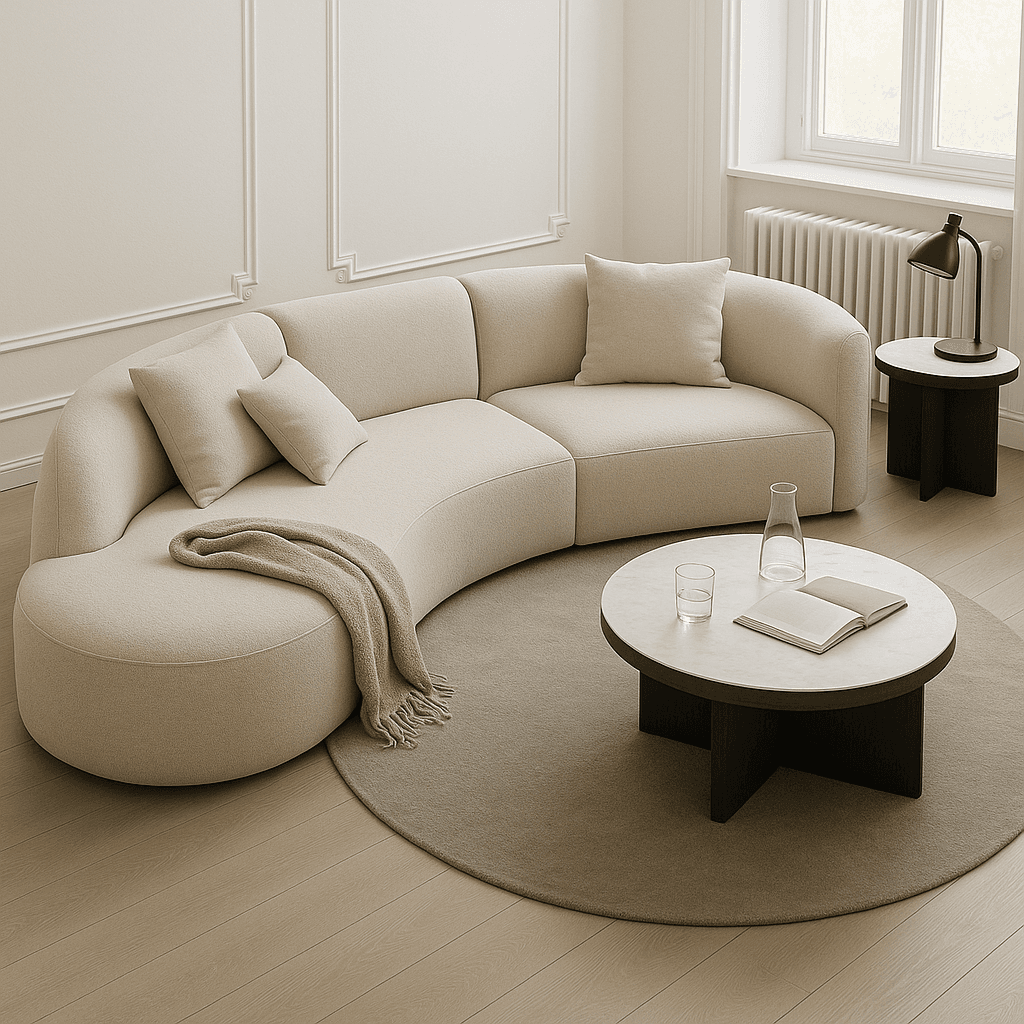
A custom sofa isn't built in a day. Behind every quality sofa you buy from a workshop-direct maker in Lahore are about 7–12 days of careful work across five distinct stages. Here is what actually happens between the day you confirm your order and the day the sofa arrives at your door.
Stage 1: Design and measurement (Day 0–1)
Everything starts with measurements and design confirmation. You send your room dimensions on WhatsApp; we send back a sizing recommendation and a sketch with:
- Exact overall length, depth and height
- Seat depth and height (these affect comfort more than people realize)
- Armrest style (rolled, square, flared, no-arm)
- Backrest height and shape
- Leg style and height
This is where mistakes are cheapest to fix. Once we cut wood, dimensions are locked.
Stage 2: Frame building (Day 1–4)
This is the most important stage of the entire process. The frame is the skeleton — get it right and the sofa lasts decades; get it wrong and even premium foam and fabric won't save it.
Wood selection
We use season-seasoned kikkar (acacia) that has been air-dried for at least 8 months. We pick straight-grained pieces without knots at any stress point.
Cutting and joining
Each piece is cut on a measured jig — not eyeballed. The frame is assembled with:
- Mortise-and-tenon joints at major corners
- Wood dowels at secondary joints
- Wood glue at every joining surface
- Screws (not just nails) at every stress point
- Corner blocks glued AND screwed into every internal corner
Reinforcement
Before the frame moves on, we stress-test it. A finished frame should be silent when pushed hard from any angle. Any squeak means the joint isn't tight enough — and it gets re-done before moving forward. More on why frame wood matters.
Stage 3: Webbing and base support (Day 4–5)
The frame is just the skeleton — what holds the cushions up is the webbing system. We use a combination of:
- Jute / nylon webbing: stretched across the seat base in a tight grid.
- S-springs (sinuous springs): for sofas where we want more "give." These are anchored at the front and back rails of the frame.
- High-density foam base layer: a 2-inch firm foam sheet between the webbing and the seat cushions.
Bad webbing is one of the most common reasons sofas sag within a year — the cushions are fine, but the support layer underneath has collapsed. We over-engineer this layer because it's expensive to fix later.
Stage 4: Foam and cushion preparation (Day 5–7)
Cushions are cut from full Mastermolty foam sheets, not patched from scraps. For each cushion:
- Seat cushions: 5-inch Mastermolty 35–40 density foam, wrapped in a 1-inch soft topper foam and a layer of polyester batting for the rounded, broken-in look.
- Backrest cushions: 4-inch 28–32 density foam, similarly wrapped in batting.
- Arm pads (if any): 2–3 inch firm foam, lightly wrapped.
Each foam piece is fitted to its specific cushion cover. We test-fit before sewing the cover closed — too tight and the cushion looks lumpy, too loose and it sags.
Stage 5: Upholstery (Day 7–11)
This is the visible stage — what the customer ultimately sees and judges. The fabric you chose is cut in panels based on the frame's exact dimensions, with allowance for the curves and tucks.
Fabric stretching
Each panel is stretched tight over the frame and stapled to a hidden side. The tension has to be even — too tight and the fabric will pull seams open over time, too loose and you'll see wrinkles within weeks.
Seam alignment
Where two fabric panels meet, the seam must be straight and parallel to the frame line. This is the single fastest way to tell a quality sofa from a rushed one. Look at the back of the seat from the side — the seam should be a clean horizontal line.
Buttoning and tufting
For chesterfield or tufted designs, each button is pulled through by hand with industrial twine — every single button. A 5-seater chesterfield has 40–60 buttons. This stage alone takes a full day.
Final stitching
Decorative top-stitching, piping along edges, and zipper installation on cushion covers — all done by hand.
Stage 6: Final inspection and finishing (Day 11–12)
Before the sofa leaves the workshop, it gets a final check:
- Sit-test in every seat position
- Hand-push the back, arms, and base — no squeaks, no flex
- Visual check on every seam, every staple line, every cushion fit
- Fabric brushed, vacuumed, and lint-rolled
- Legs leveled — if any leg is even slightly short, it's shimmed and re-checked
Only after this does it go on the delivery truck.
Stage 7: Delivery and setup
For Lahore deliveries we handle this in-house. We arrive at the agreed time, carry the sofa carefully through your doorway (using the dimensions we measured at design stage so it always fits), set it up exactly where you want, and remove all packaging. We currently only deliver within Lahore — no nationwide shipping.
What you're really paying for
A handcrafted sofa is not just materials — it's the 70–90 hours of skilled labor across all these stages. When a quote is 40% below market, it's because at least one of these stages was skipped or substituted. Full price breakdown here.
Want to see it for yourself?
If you're in Lahore and want to visit the workshop, we'll show you frames mid-build, foam being cut, and finished pieces ready for delivery. Just message us first so we can have someone available. WhatsApp +92 323 0180873.
Need a custom sofa or deewan?
AM Sofa Studio is a Lahore workshop. Send your room measurements on WhatsApp and we'll build to fit — free delivery across Pakistan, structure warranty included.